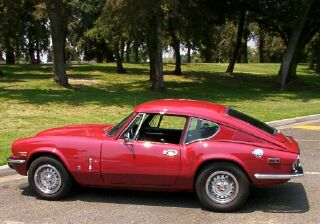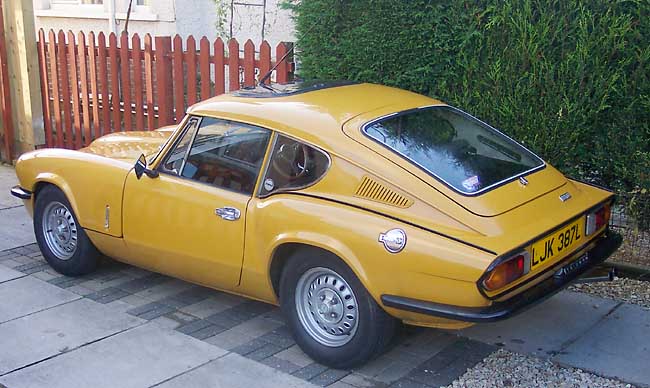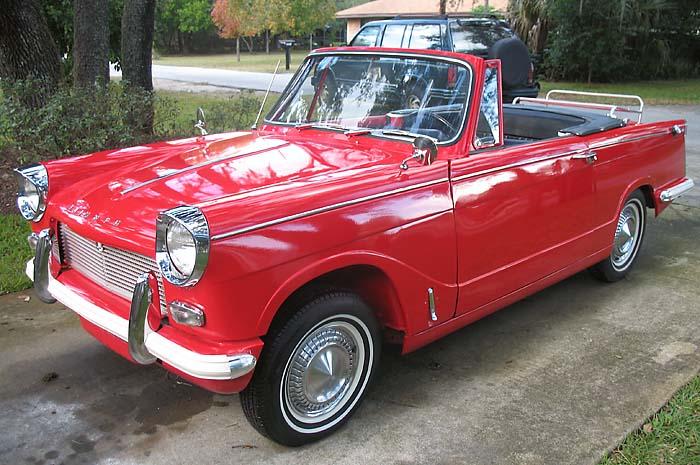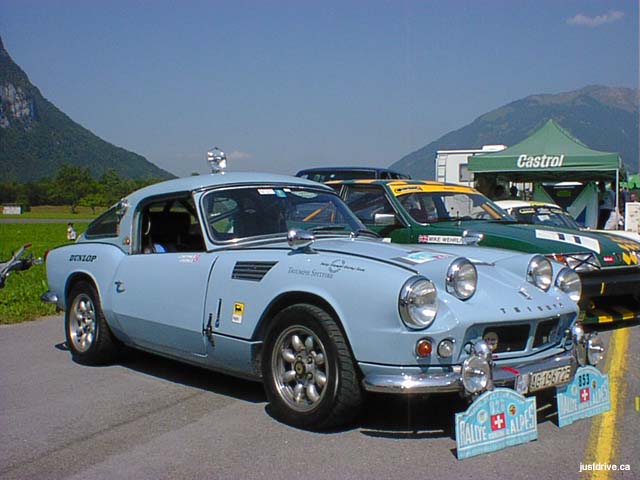
In
the early 60's, the aircraft company
Vickers/Supermarine wanted to use the Vanguard
name for one of its passenger aircraft. They
said in exchange they would allow
Standard-Triumph to use the name of one of their
aircraft. Standard-Triumph picked Spitfire.

The Spitfire's code name during development was "the bomb".

Pop-up headlamps were considered on the Spitfire, and one mock-up was made, before it was rejected. A fiberglass body was also considered and rejected.

According
to Hemmings Motor News, the Spitfire's 24 feet
turning circle is the shortest distance of any
production car built.

The
Spitfire was to be originally called the
Spitfire 4 but was changed to the Mk1. The
badges remained as the Spitfire 4.

On original MkII's boot lids the "H" in TRIUMPH is not in line with the other letters, it is slightly higher.

The
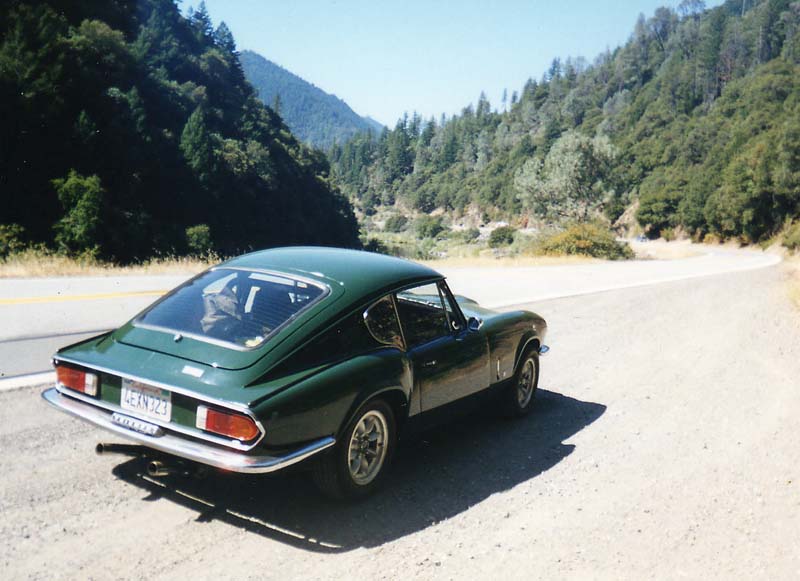
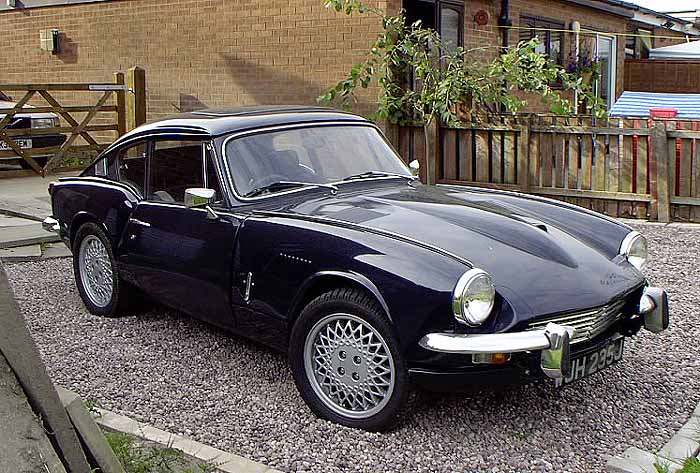
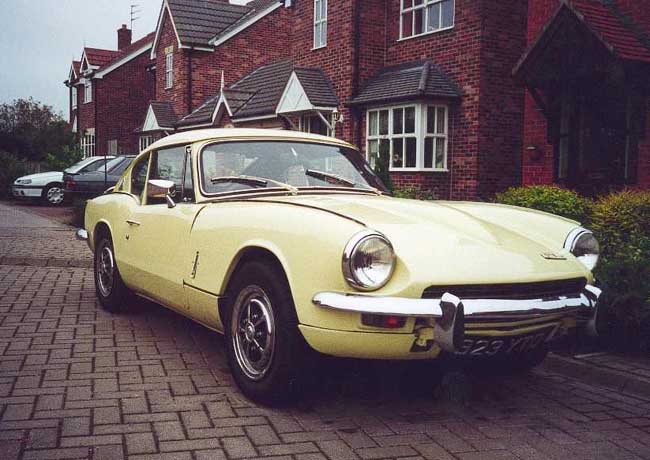
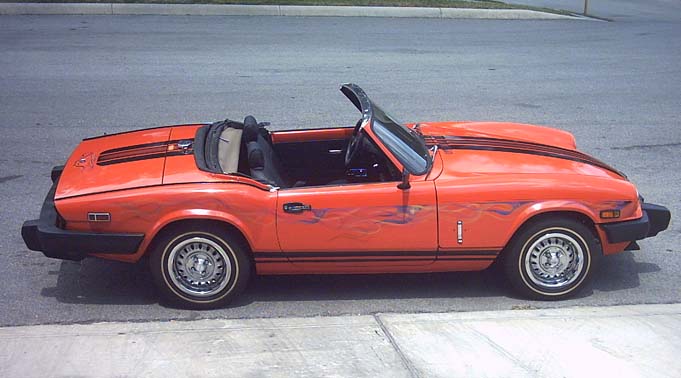
early (round tail) Spitfires share their
windshields with the TR-4, TR250 and TR-6.

In 1965, Spitfires came first and second in class at Le Mans.

The 'Rotoflex' rear suspension as used on the GT6 Mk.2/+/Mk.3 was considered for the Spitfire but rejected due to cost reasons.

The six-cylinder engine was not fitted to the Spitfire because it was felt it might siphon sales from the more expensive TR6.

It is believed that the 1500's rust less than earlier cars, but surprisingly, the cars originally painted brown (Russett) seem to rust the least.

It is well know that designer Giovanni Michelotti was responsible for the corporate Triumph look of the 1970's which resulted ing the restyled MkIV Spitfire, but less well known that he undertook the original car's styling, also. His signature can be found in the form of an "M" on the bonnet latches.

In the 70's an print advertisment featured a Spitfire car in front of the Spitfire airplane. The ad was not successful due to the fact most looked at the plane instead of the car.

Spitfires outsold MG Midgets every year of its production except one. On a related note, in 1974 British Leyland gave Midgets the Spitfire's 1500 engine.

The first version of the Spitfire's 1500 engine was fitted to a 4WD drive vehicle for the Israeli Army in the late 60's.

The
100,000th Spitfire came off the line Feb. 1968
(a MkIII).
The
last Spitfire made was in August 1980 and had the VIN number TFADW5AT 009898 in FAB Inca Yellow.

Actor
Nicolas Cage's first car was a Spitfire.
See photo
"I had a Triumph Spitfire," says Cage, 36. "It
was a beautiful little roadster in a faded
yellow. But it also needed a lot of work. I
couldn't get it registered, so I would sit in my
car in the garage and pretend I was driving to
the beach with the sun in my face. But the only
light was this tiny bulb overhead," Although he
finally got the car registered, Cage eventually
gave up his wheels. "I found out this car was
going to break down every single week," he says.
But persistence triumphed in the end. "I found
that car again a year ago and I bought it," he
says. "I wanted it to know that it didn't get
the best of me"

Uri
Geller, famous spoon-bending, mind-control
artist of the 70's.

Joyce
Hoffman, world champion surfer of the
60's.

According
to Feb 2001 "Q" Magazine, Rod Stewart
said in the early 1960's it was his ambitition
to own a Triumph Spitfire.

Alexandra
Bastedo, of the 70's British television show
"The Champions" says she "absolutely adored that
car" as she drove it around London. See
jpg of an a magazine article.

Mike
Tyson, baseball player for the St. Louis
Cardinals owned a 1977 Spitfire 1500.

Tippie
Hedron, mother of Melanie Griffith and
actress made famous in Alfred Hichcock's The
Birds owned a 1975 Spitfire 1500.
"Tippie attended an auction fell in love
with the car and purchased it on the spot. Later
the car was donated/raffled to support an animal
shelter she runs in north of L.A. called
Shambala."

Lizzie
West, soon to be famous Warner Bros.
musician owns a 1977 Spitfire 1500.