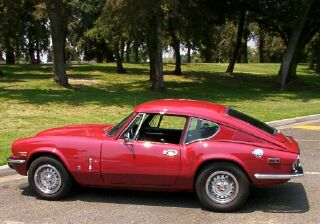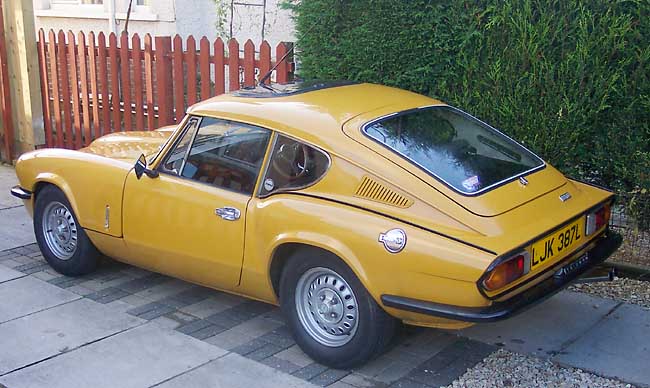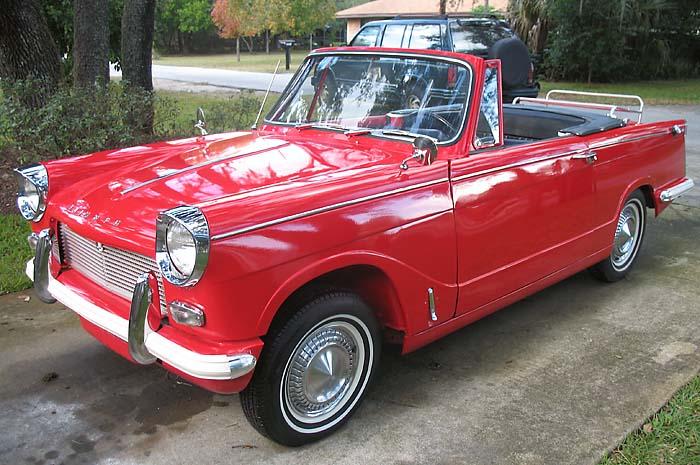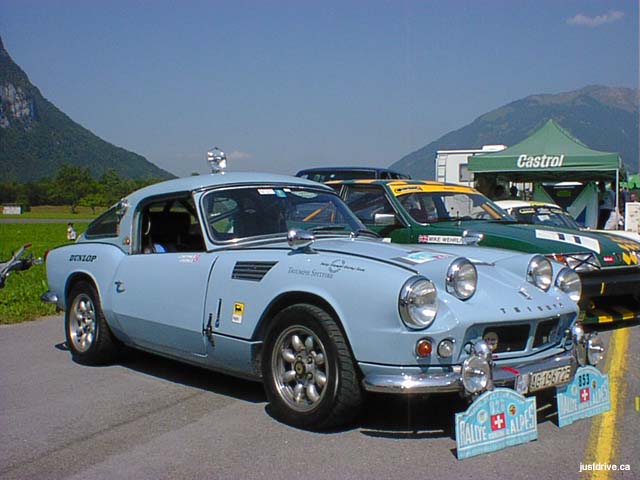
I have been a Triumph Sports car
enthusiast since 1972 with the purchase of a GT6.
In the years that followed I have owned 9 GT6's, 7
Spitfires, 3 TR7's and 1 TR8.
This Spitfire was preceded by two 6-cylinder
Spitfire project cars. My first attempt at a Spit-6
was the transplant of a GT6 2.0 litre engine
resulting in a Spitfire 2000. This was a
straightforward swap and very rewarding as it
combined the best properties of both the GT6 and
Spitfire. The sound of that GT6 engine at highway
speeds with the top down is exhilarating.
With success I became more ambitious and
constructed a Spitfire 2500. The slight performance
increase of this 2.5 liter TR6 engine (105 hp) over
the 2.0 liter GT6 engine (95 hp) did not justify
the added effort in shoehorning this taller engine
into a Spitfire. In retrospect, I feel that the GT6
engine is without a doubt the better choice for a
Spit-6 project.
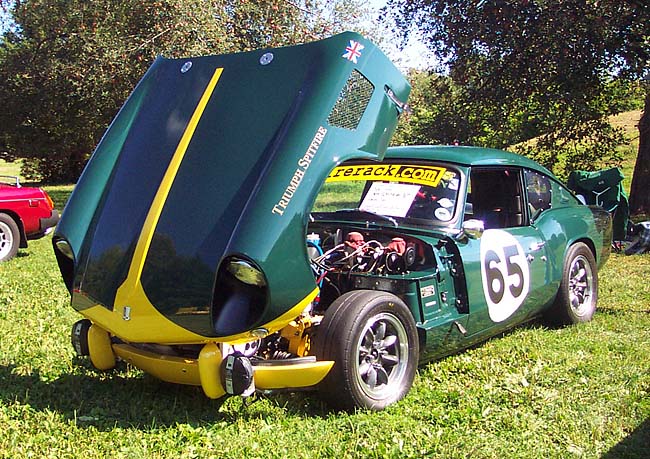
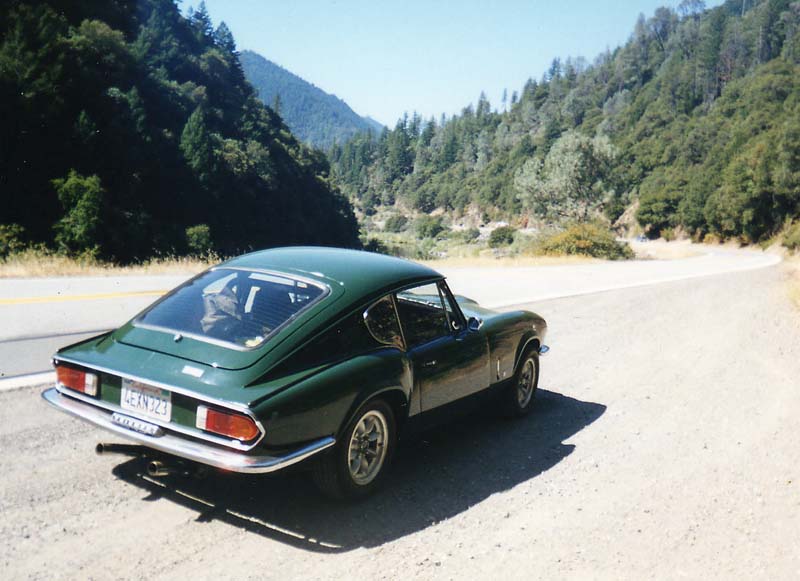
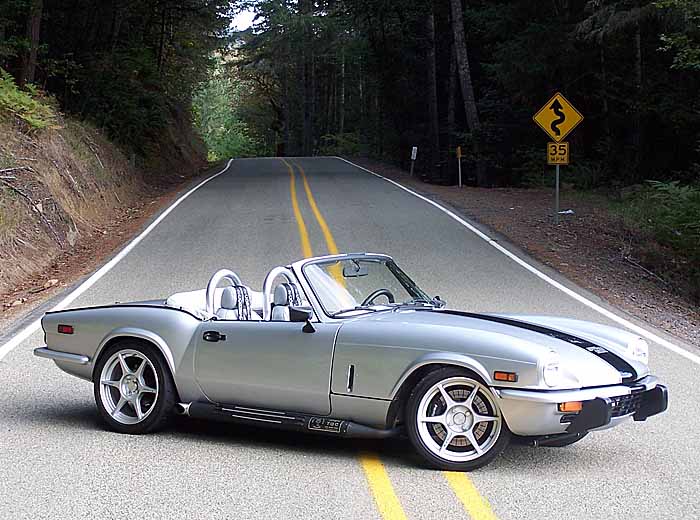
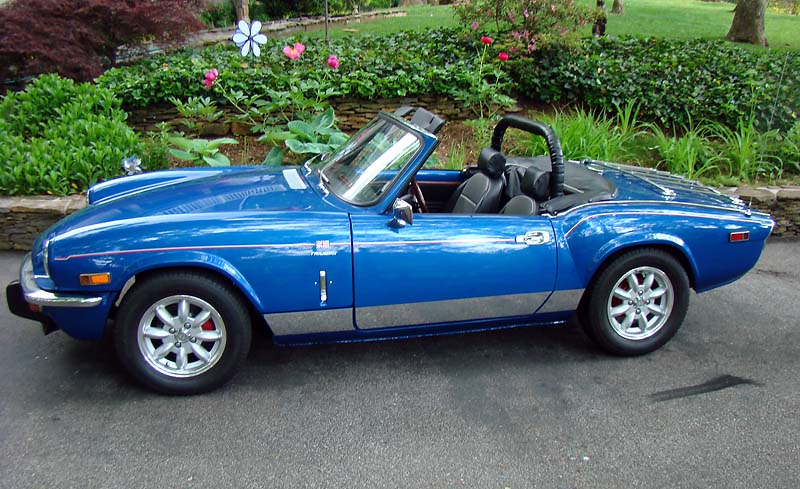
Our Spitfire 3500 project comes as
close to owning a 427 Cobra as we are likely to
ever see. The
aluminum 3.5 liter engine has been
upgraded with a performance camshaft, higher
compression pistons, a 390 cfm Holley carburetor,
and custom-made headers. This brings the engine's
output to an estimated 200 horsepower. The front
suspension and brakes have been borrowed from a GT6
and Quaife limited slip differential have been
added for good measure.
The car weighs in at 1780 pounds making a
impressive power-to-weight ratio. Under hard
acceleration, this car grabs your attention like no
other car I have ever driven. The handling is
surprisingly neutral with the aluminum V8 engine
weighing less than the 6-cylinder cast iron blocks.
All considered I would have to say that I am very
pleased with this most recent engine swap.
Only when
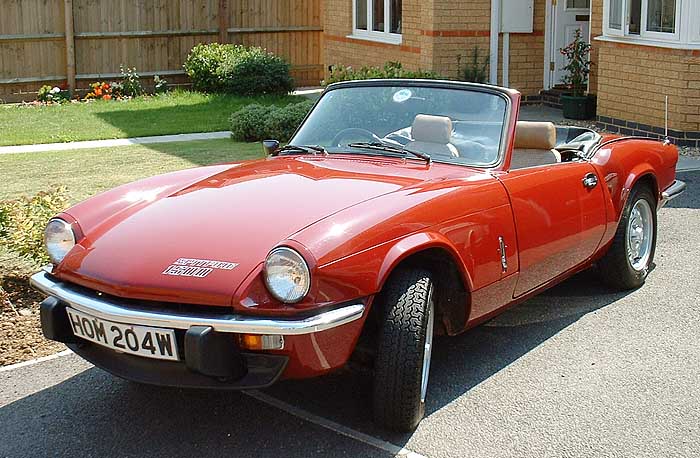
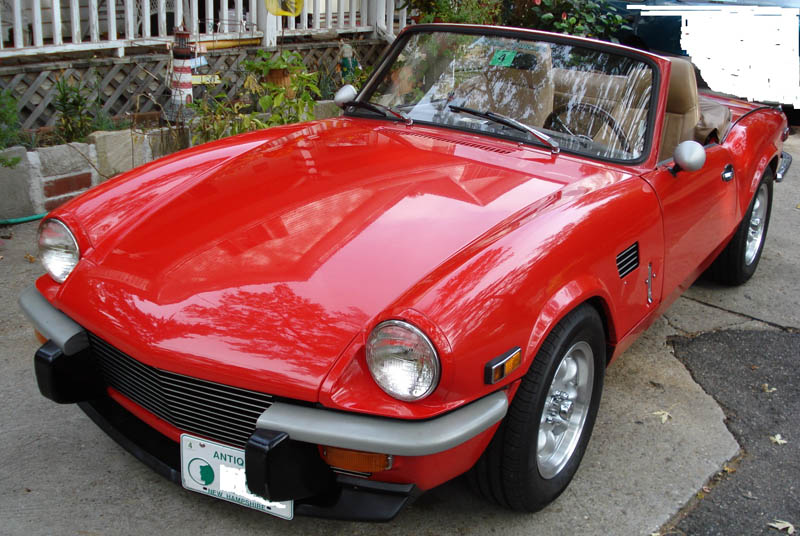
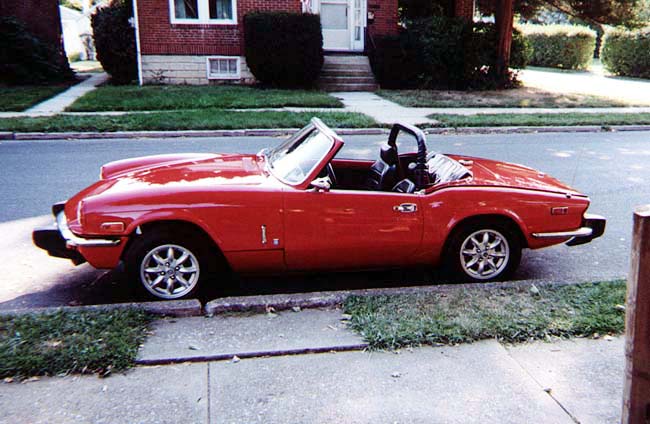
parked along side another Spitfire
does it become evident that this Spitfire 3500 is
actually 8 inches longer than stock. The
bonnet and frame have been
extended to accommodate the new engine along
with its 5-speed transmission. This is a Triumph
TR8 in Spitfire's clothing.
My wife Christie stepped into the garage as I
was working on this car one evening and made the
following profound statement: "Why don't you just
bolt in a jet engine? You are going to do it
eventually anyway!" I can see why she would
consider that to be the next logical step in my
series of engine swaps.
One of the more memorable events
with this car occurred during the Moss Motors
British Car Festival held in Solvang, California in
1998. I was preparing to race my Spitfire for the
first time in the Autocross slalom competition when
I was made aware of a "Women's All British" class.
I had a difficult time persuading Christie to enter
this competition and when she finally agreed to
race, she pointed out that she had never actually
driven this car before. She only had a few minutes
to acquaint herself withe the car before taking her
first of 3 timed runs. Her lap times improved by
several second on the second and again on the third
and final run. Following this display of driving
prowess, she received the award as "The Fastest
Female British Car Driver" of the 2-day event. I
could not have been more proud!
|
specifications
|
1964
Spitfire Mk1
|
1964
Spitfire 3500
|
|
engine
construction
capacity
power
transmission
length
weight
top speed
0-60 (0-100 kph)
|
in line 4
Iron block & head
1147 cc
63 bhp
4-speed
12ft. 1in.
1568 lbs.
96 mph
13.7 seconds
|
V-8
Aluminum block & head
3528 cc
200 hp
5-speed
12ft. 9in.
1780 lbs.
140 mph
5.5 seconds
|
Return to Swaps Index