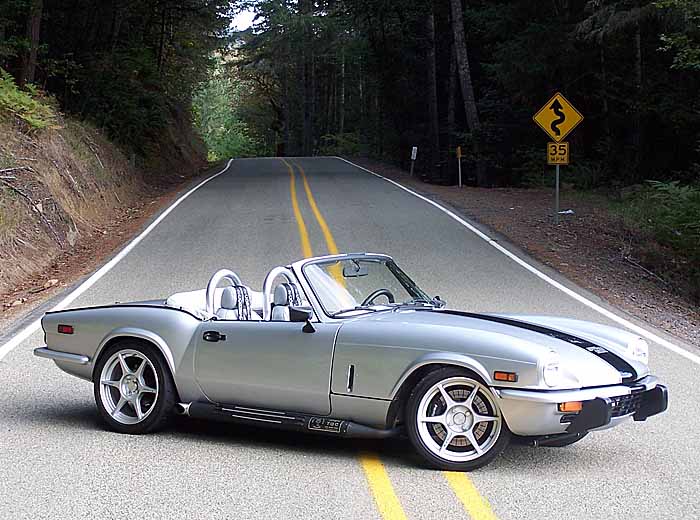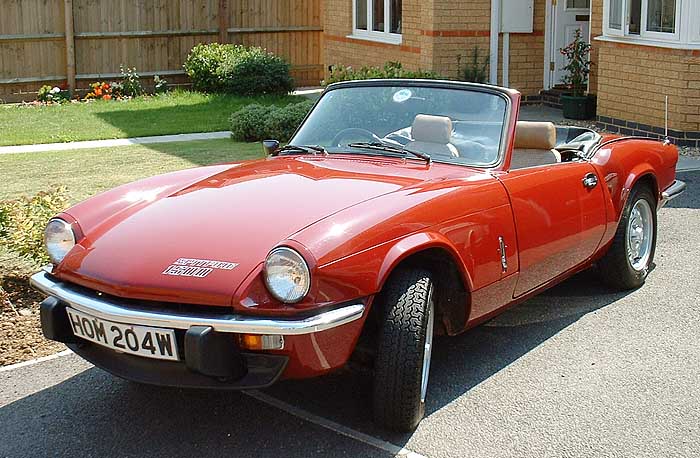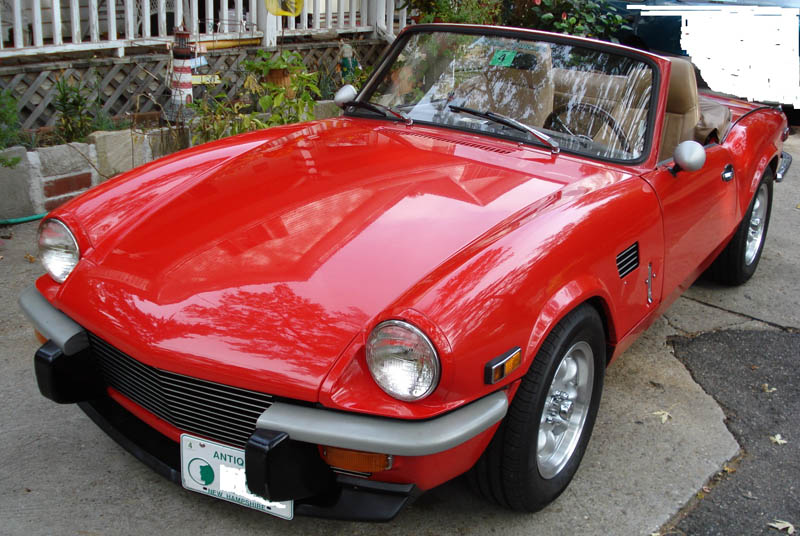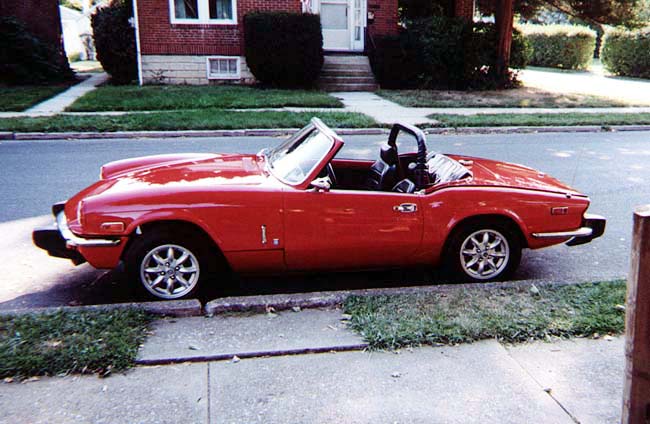
|
Congratulations on considering a Spitfire
or GT6. They not only look great but are fun to
drive!
I must first say you will be buying a hobby
not a car. These cars are old and being built on
even older technologies and designs, they are
not as reliable as a modern car. These cars
require maintenance that modern cars have
engineered out. That been said, it will break
down so be prepared.
But the good thing is they are usually very
easy to fix and/or work on. And on most any
street corner there is an "old guy" that not
only had a Triumph but knows exactly what is
wrong. And there are many companies that sell
parts. The only parts that are difficult to get
are some body panels on very early cars, some
emissions parts and some chrome trim. But there
are also many companies out there that sell
"used" parts.
When buying one of these cars, keep in mind
that most everything is easily fixed EXCEPT body
work. Rust can often make an otherwise decent
car an expensive pile of **** or even a
deathtrap. When looking at the car be sure that
major rust hasn't been quickly covered up and
painted over. It is a good idea to take a
refrigerator magnet and run it around areas of
the body like behind the wheels, under the doors
and the nose. If the magnet doesn't stick there
is probably "Bondo" filling. This is not always
bad but at least you are aware of previous
repairs and discuss them with the owner. Got to
our checklist
page and print out the list to take with
you. It will help you be more objective about
the car and not just see it as a cool new
toy.
What is it worth? Good question. A lot
depends on the current condition of the car, how
much is still original, the age of the car,
famous previous owner, etc. Occasionally you
will find a person that wants to get rid of
someone else's car (ex-husband, death in the
family, etc.). These cars are usually a steal as
the seller has no idea of the value and rarely
cares. These cars are rare and are the
exception. The more normal sale will not be as
cheap as these. The value of these cars is a
tricky thing. As a general rule, the older &
more original, the more valuable. (If you change
anything with a non-original item i.e. replacing
a Zenith Carb with a Weber, keep the item. You
can always put it back on later.) My guess based
on prices I have seen for Spitfires is: Rust
bucket/Parts cars- $0-$800, Fun driver needing
things- $1000-$3000, A restored or great
original- $3000-5000, perfect cars- $5000 and
up. Remember, it is almost always cheaper to buy
a pretty good car with minor things wrong than
to buy a piece of **** and fix it up. This been
said, buy the best you can afford, and know what
needs attending to up front.
When you get the car it is a good idea to give the car a complete going over. Replace all fluids (oil, brake fluid, diff., coolant). Oil/grease the hinges, u-joints, trunnions, etc. Give it a full tune up (new plugs, ignition wires, dist. cap, points, check timing, etc.). Change all filters, hoses, belts and pads. Having everything that wears out replaced will ensure your car getting off on the right foot. This will cost around $150 for you to do or a couple of hundred for someone else to do it. You might consider rebuilding the carb(s) also. It can make a huge difference!
If the car has been sitting for a while, the brakes and clutch will probably have problems. Repairs are relatively straightforward but MUST be fixed. Safety is paramount.
I don't want to scare you with all the talk
of bad reliability but this car is old...the
newest Spifires are now more than 20 years old,
the early ones 40ish. Keep that in mind. There
is no reason, with a little work, the car
couldn't be a daily driver.
The
basic things you will need:
1. A basic set of tools; a non-metric socket set, a set of screwdrivers in various sizes, Vise Grips, etc. and occasionally a hammer (you will understand soon). Also, Go-Jo hand cleaner works miracles! Other tools can be added as you go along.2. A Workshop Manual. There is a
decent "beginners" manual made by Haynes.
Books for Cars.com has them as cheap as I have
seen online.
3. A good attitude and good
friends. Until the car gets most
everything fixed, there will be times of
frustration. You may need friends, preferably
ones that own British cars, to keep your
outlook positive. You may also have to have a
friend come and tow you home. Don't forget
the cell phone.
A
few other things I have learned that are
extremely helpful:
1. Join a local British Car club.
There will be many with a similar love of
these cars and endless knowledge base of info
that can't be found in the manuals. They will
also recommend local mechanics, parts stores,
etc. or even have cars or parts for sale.
Members can even be on your "help list" if
you are ever stranded. Occasionally clubs
will host or visit car shows. You'll get to
see perfect examples of your car. Visit our
clubs lists.
2. Get Help Online. There are
numerous resources available one the web.
Visit the links on our links
page. Post a question on our bulletin
board. Join an email
list. If you are new to the web, an email
list is something like an informative chain
letter. You send a question to one person and
everybody on the list gets it. If you can
answer the question, you answer to
everyone.
3. Order parts catalogs. Not only do these catalogs give you an idea about the price of parts, it will contain illustrations of how things are put together. And most are FREE.
4. Get a "parts car". This might not be practical for everybody but it is a great time and money saver. I purchased a rusted out but very original car for $200 and have used thousands of parts from it. If I'd bought the parts new, or even used, they would have far exceeded the $200 price tag. And I often use the car as a 3-D manual. If I don't understand an illustration in the workshop manual, I go to the parts car and see how the part should be fitted. Parts cars can often be found in the classified section of your local paper, in club newsletters or the "Spitfires
Only" Classifieds.
5. Subscribe to Spitfire & GT6
Magazine. Since we produce this magazine we recommend it. Consider it, four issues is less than half the price of a tank of gas!
6. Learn some of the Terminology.
When discussing these cars, enthusiasts like to use the British terms. A quick set of necessary ones are: Bonnet: the engine cover (hood), Hood: the convertible top, Boot: the trunk. For a complete list, visit our terms page.
7. Visit our FAQ page. We receive many of the same questions over and over by new owners. Here are some of them with answers.
A
few other things I have learned the hard
way:
1. You now own a hobby, not a
car. These cars are fun but will require
much more maintenance than a modern car. Be
prepared. If you are not willing to work on
it (or can't afford for someone else to do it
for you), get a Miata.
2. Never throw anything away. A soon as you do you will need it. Even replacing a part with a new one it helps to have the old one if the part comes partially assembled or even worse, does not work. I have gone so far as to use old carpet scraps to fill in an area where the new carpet set did not quite cover fully.
3. Get a can of GoJo hand cleaner.
Magic stuff for cleaning your hands after
working on your car. It will, with enough
work, even clean grease from under your
fingernails! Lets see soap do that!
4. Master cylinder repair kits rarely
work. I have rebuilt 4 master cylinders
and only one worked like it was supposed
to.
5. Many electrical problems are due to dirty contacts. A good cleaning with sandpaper of contacts will often fix things. Large numbers of things not working (all tail lights, all dash lights, etc.)... clean the grounds, then suspect the contacts made by the fuse behind the fusebox.
The
numbers on your car:
Commission number; The Commission number is your car's VIN number and is the best way to tell your car's age. It will be a long series of letters and numbers beginning with (most of the time) an F.1. Commission number location. It
is located on a metal plate riveted in
different locations depending on the year of
your car.
The Commission plate is most often located
under the car's bonnet (hood) on left side of
the body photo
and will look similar to this photo.
On later cars the plate was moved to the
driver's side door pillar. (photo)
There might also be a plate on the left side
inside the windshield. (photo)
Of course your commission number will be on
your title (but will probably be listed as a
"VIN" number).
2. What the Commission number
tells. In the 60's and 70's it was not
uncommon for car dealers to list as car's
year on the title the date the was
SOLD not the year it was made. This causes much confusion for new owners. If a Spitfire came off the assembly line in Dec. 1970, arrived at the dealer the following May, sat on the lot then sold in January, the title might state that the car is a 1972 Spitfire. Scary but true. The Commission number will have to tell the real story.
This
link will list Commission numbers and will give you an idea how to guess the approx. date your car was built. This link will explain why I say approx. date.
Right now the only way to get the
exact date the car was made is to have
a British
Motor Industry Heritage Trust Certificate
processed. A company in England still has
most of the original factory records about
many British car and will send you a copy for
$50.
3. Other Numbers. There are other
number sprinkled around your car.
The engine number is located on the
distributor side at the back of the engine on
a flat area between the head and block (see
photo).
This link
will give info about engine numbers.
The body number plate is located below
the commission number plate under the car's
hood on left side of the body (see photo)
The diff and frame also have numbers: (photos to come).
Don't panic if the Commission number is not the same as the engine. The Commission number, body number, engine number, dif, frame, etc. will all be different...close but not the same. Only be concerned (if this concerns you) if there is a huge difference in the numbers. For instance if your Commission number is FH38050 and your engine number is FM150002E then the engine is not original to the car (engines are so easy to swap that owners often did...to fix warn out engines or wanting more power from a different year).
Final thoughts:
LBC's (Little British Cars) are like potato chips, no one can have just one!
Good luck and happy motoring!
Return
to Home
|